
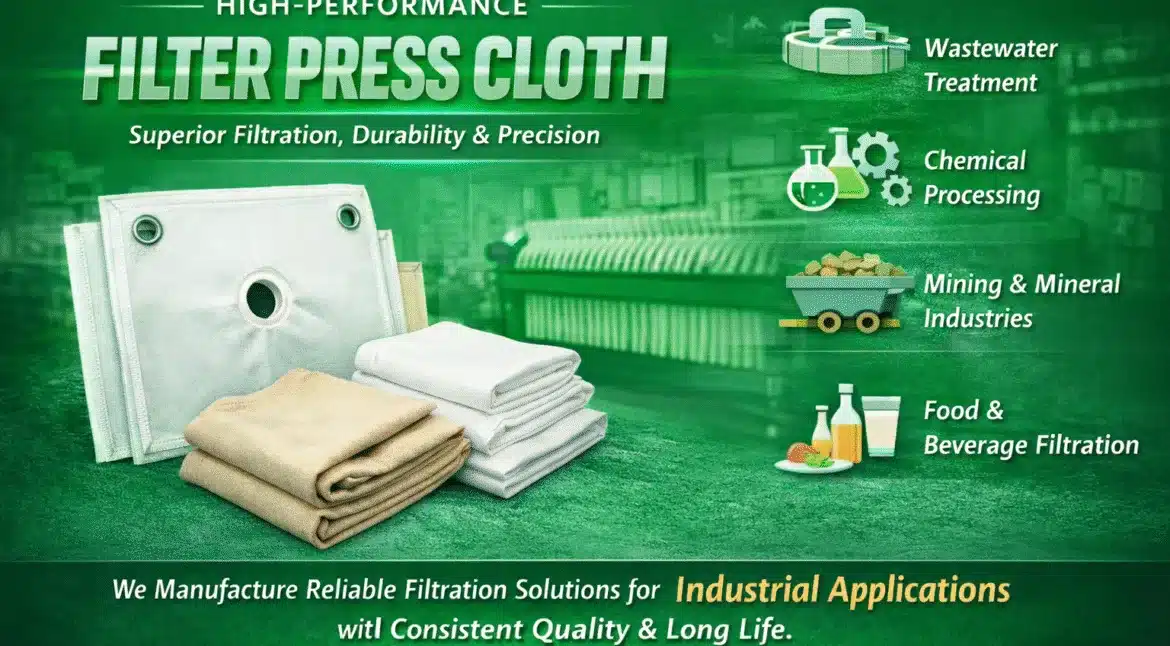
Filter press cloths play a vital role in achieving stable and efficient filtration across sectors like mining, chemical processing, pharmaceuticals, food production, and wastewater treatment. When these cloths perform well, they ensure proper solid-liquid separation, protect machinery, and keep production running smoothly.
However, common challenges such as leakage, clogging, and premature cloth deterioration can reduce plant efficiency, increase operating costs, and even create compliance and safety issues. In facilities where every hour of downtime matters, addressing these issues quickly is essential.
This guide outlines the key warning signs, root causes, and practical solutions to help improve cloth performance and extend service life.
1. Leakage Issues
Leakage occurs when slurry or filtrate escapes around the cloth rather than passing through it. This not only affects filtration quality but can also lead to contamination and equipment stress.
Warning Signs
-
Filtrate leaking from cloth edges or plate corners
-
Drips, streaks, or slurry build-up around the press
-
Decline in filtrate clarity or product purity
-
Increased rejection or reprocessing of output
Likely Causes
-
Improper cloth alignment or installation
-
Torn seams or worn edges
-
Incorrect cloth design or material for the press
-
Dirty or damaged filter plates or sealing gaskets
-
Uneven pressure applied during the cycle
Corrective Actions
-
Install cloths smoothly and ensure plates are clean before fitting
-
Replace damaged cloth edges or seams immediately
-
Use reinforced seam technology for better durability
-
Select cloth types that match plate design and slurry properties
-
Check hydraulic pressure regularly to ensure consistent sealing
2. Clogging and Blinding
Clogging happens when fine particles accumulate in the cloth pores, slowing filtration and reducing cake dryness. Over time, this can cause severe “blinding,” where flow becomes nearly impossible.
Warning Signs
-
Reduced filtrate flow or longer filtration cycles
-
Excessively wet filter cakes
-
Frequent cloth washing or cleaning downtime
-
Press not reaching expected dryness levels
-
Higher energy consumption during pumping
Likely Causes
-
Cloth pore size too small for the slurry
-
High-fines or sticky materials blocking the surface
-
Poor cake release after each cycle
-
Insufficient slurry conditioning
-
Inadequate cleaning or backwashing
Corrective Actions
-
Choose suitable permeability levels based on slurry composition
-
Implement regular cleaning schedules (water, steam, or mild chemicals)
-
Apply anti-stick or hydrophobic coatings when needed
-
Improve slurry pre-treatment to control fine particles
-
Adjust cycle parameters to prevent excessive cake compaction
-
Train operators to detect early signs of cloth blinding
3. Fabric Wear and Damage
Cloth wear directly impacts filtration efficiency and replacement costs. Identifying early damage helps prevent unexpected shutdowns and improves long-term performance.
Warning Signs
-
Thinning areas, holes, or pin-point tears
-
Frayed cloth edges or weakened seams
-
Shortened cloth lifespan
-
Gradual loss of filtration quality
Likely Causes
-
Abrasion during cake discharge or washing
-
Chemical degradation from incompatible cleaning agents
-
Over-pressurization during cycles
-
Harsh or incorrect cleaning techniques
-
Poor storage or handling practices
Corrective Actions
-
Select cloth materials according to operating conditions
-
Avoid aggressive scraping during cake removal
-
Use only approved cleaning chemicals
-
Operate within recommended pressure limits
-
Inspect cloths regularly and maintain a replacement log
-
Store cloths in a dry, protected environment to prevent fiber damage
Building a Preventive Maintenance System
A proactive maintenance strategy can significantly increase cloth life and improve filtration reliability.
-
Inspect cloths and plates before each cycle
-
Keep sealing surfaces clean to prevent leakage
-
Track cloth usage and replacement history
-
Replace cloths before failure rather than after breakdown
-
Collaborate with experienced suppliers for technical guidance
-
Train operators on correct installation and cleaning methods
-
Integrate cloth inspection data into your plant’s maintenance software
Ensuring Reliable Filtration Performance
Choosing the right filter press cloth and maintaining it properly is key to achieving consistent filtration results. Engineered cloth solutions designed for your specific slurry and process conditions can reduce downtime, enhance cake dryness, and lower overall operating costs.
For advanced technical assistance, cloth audits, or customized filtration solutions, consult an expert filtration partner who understands both material design and industrial application needs.

